Published in 2025
Deepflare achieves 3x higher hit-rate than netMHCPan in Progeneer’s in vivo study of cancer vaccine
Bridging the Gap Between Predicted Antigenicity and In Vivo Efficacy of Cancer Vaccines
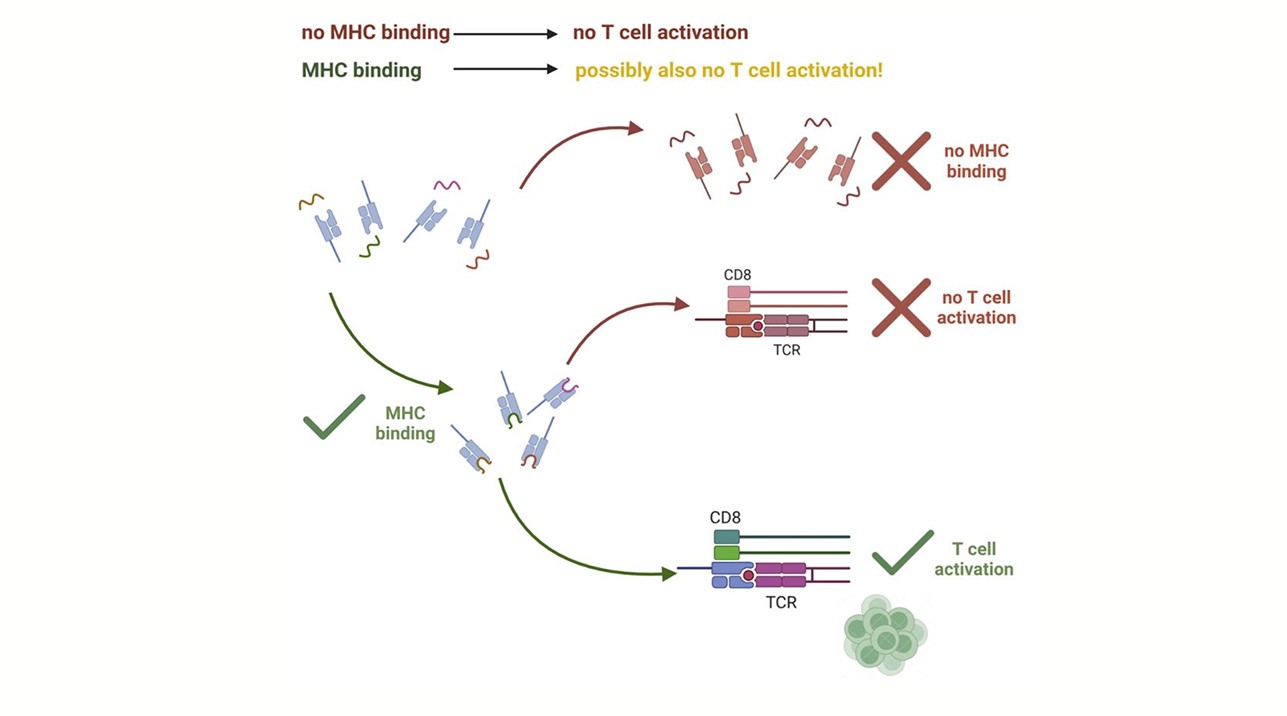
Standard computational methods for identifying T-cell epitopes often rely heavily on predicting MHC binding (antigenicity). While this is a necessary first step, it is frequently insufficient for predicting a protective anti-tumor response, especially for neoantigens or therapeutic peptides that closely resemble self-peptides. This disconnect between retrospective prediction and prospective in vivo success creates significant hurdles in developing effective biotherapeutics.
This case study details a head-to-head comparison between netMHCpan and the Deepflare platform in Progeneer’s development of a cancer vaccine, where we enabled identifying epitopes driving anti-tumour response. A leading MHC prediction model, netMHCpan, failed to translate promising predictions into in vivo efficacy, while the Deepflare platform demonstrated a significant improvement by decoupling antigenicity from immunogenicity.
Results: A 3x Higher Hit-Rate in Identifying Protective Epitopes
netMHCpan: Identified only 1 immunogenic peptide out of 4 (25% hit-rate). This single hit was a previously known positive epitope documented in the IEDB database.
Deepflare Platform: Identified 3 immunogenic peptides out of 4 (75% hit-rate). The platform also identified the known positive epitope, but crucially, discovered two additional, novel immunogenic peptides from its three remaining predictions.
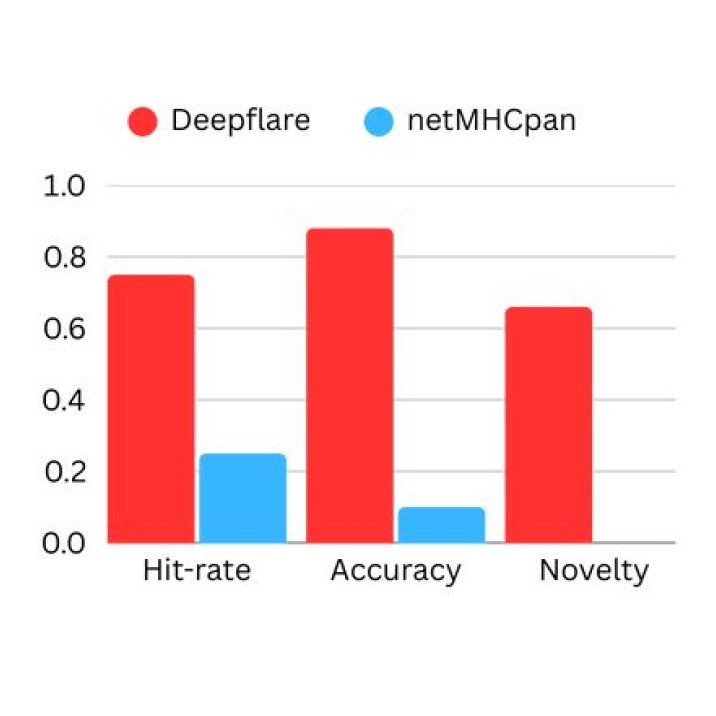
Fig. 1a, Hit-Rate - fraction of peptides confirmed to be immunogenic via statistically significant cytokine release. Novelty - Hit rate for peptides never found in the literature. Accuracy - fraction of peptides correctly assigned by the model as positive/negative.
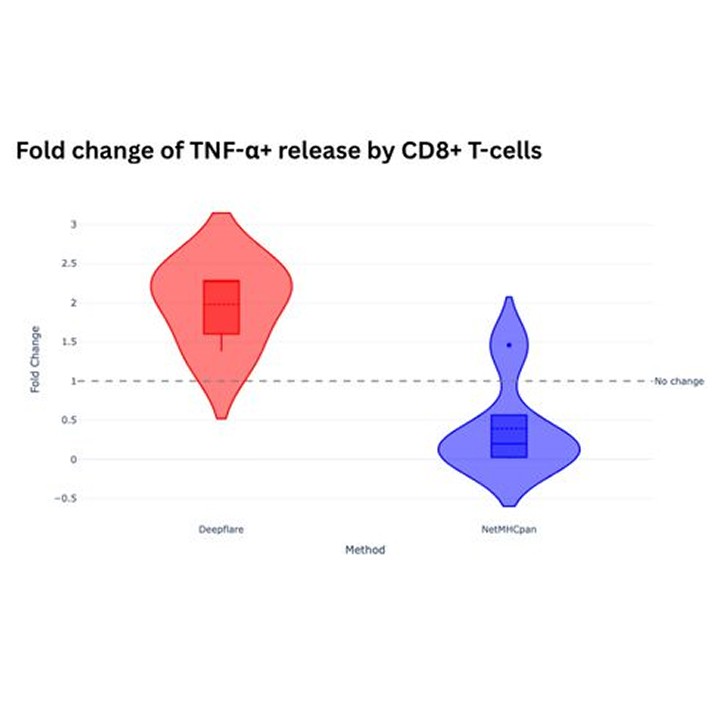
Fig. 1b displays the corresponding T-cell activation data, showing the significant increase in cytokine levels for the successfully identified peptides versus the control stimulation.
Study Design: A Head-to-Head Preclinical Comparison
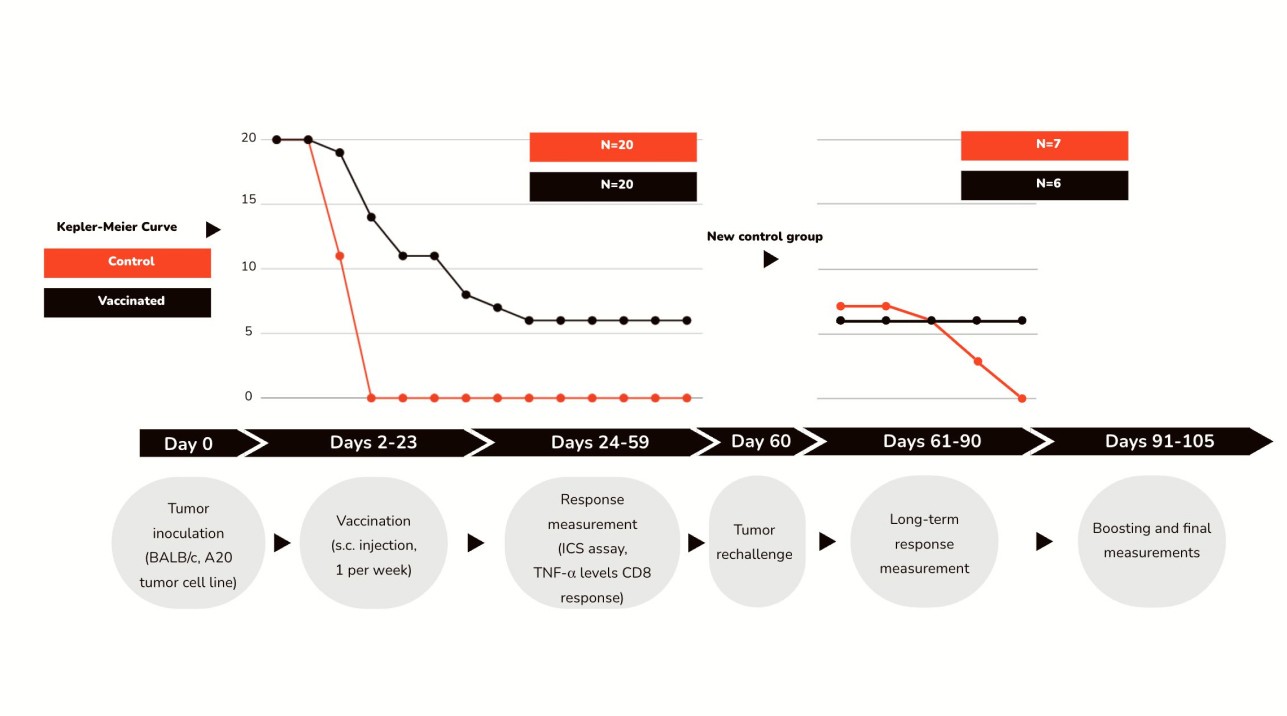
An mRNA vaccine composed of a full antigen was administered to BALB/c mice with aggressive A20 lymphoma. The vaccine proved effective, causing tumor regression and conferring protective immunity upon re-challenge.
In a recent collaboration with the leading French Biotech company Osivax, Deepflare demonstrated that for the most challenging viral vaccines, even Nobel-winning AI models like RFdiffusion can be of no use. Deepflare AI achieved a 100% expression rate (as demonstrated in a prospective in vitro test by Osivax), while RFdiffusion yielded 0% in silico success rate.
• Two models were compared: The Deepflare platform and netMHCpan.
• The task: Each model selected four candidate peptides for validation.
• Validation method: Ex vivo FACS assays were used to quantify T-cell responses.
The Deepflare Advantage: Decoupling Antigenicity from Immunogenicity
The performance gap arises from a fundamental difference in approach. Antigenicity is necessary for an immune response, but it is not sufficient to guarantee it. The Deepflare platform's model predicts antigenicity and immunogenicity as separate, distinct properties. This allows it to filter out peptides that can bind but are unlikely to trigger a robust T-cell response.
By identifying truly protective epitopes with a 3x higher hit-rate, the Deepflare platform provides a more reliable path from computational prediction to effective, in vivo results.